So — Bowness on a Tuesday evening in June. The Bow River pathway is full of people on bikes heading to Bowness Park, the lagoon is glassy, and a few barbecues are smoking near the lower picnic shelters. Looking west from the upper benches you can see the COP ski hill jump tower and, on a clear day, the front range of the Rockies behind it. You can be on the Trans-Canada Highway in five minutes. You can be at Banff in roughly an hour and a half. That's the Bowness pitch — a mature, character-driven NW community where the mountains are genuinely close and the lots are still big enough to redevelop.
Last updated:What it's actually like
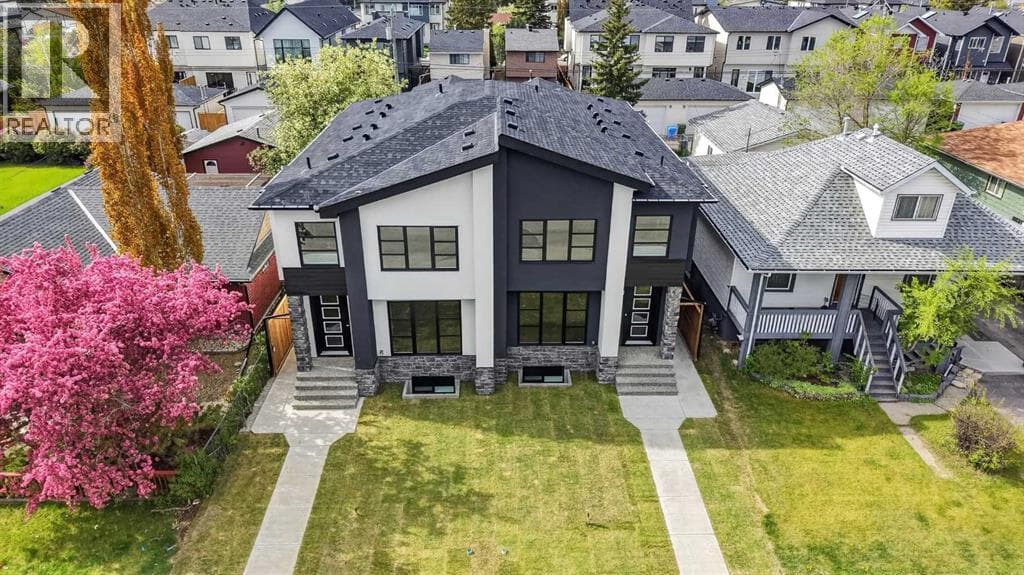
Bowness sits in the Bow River valley in NW Calgary, hemmed in by the river on the south side, the escarpment up to Hwy 1 on the north, and Stoney Trail on the west. The street grid is the old Bowness Town grid — slightly off-axis from the rest of Calgary because Bowness was its own municipality until 1964. Wide residential streets, mature elms and poplars, a real mix of original 1950s-1980s bungalows, character two-storeys, and a steadily growing layer of new infill 4-plex and 8-plex builds replacing older homes on the bigger lots.
Bowness Park is the heart of the community. 22 hectares, a lagoon you can paddle in summer and skate in winter, paved pathways that connect into the Bow River regional pathway system, BBQ pits, picnic shelters, and the cafe building at the entrance. On a summer evening it's the closest thing Calgary has to a small-town park scene — kids on scooters, retirees on benches, the smell of grills coming off the river.
Mainstreet Bowness — 47th Ave NW between roughly 76th and 86th Streets — is the local commercial spine. Cadence Coffee, the Bowness Diner, a couple of local restaurants, Seasons of Bowness independent grocer, the public library. Not Inglewood-scale density yet, but more amenity than any other 1960s NW community.
Housing stock
Three flavours, with the infill story shifting under our feet thanks to the 2026 zoning change.
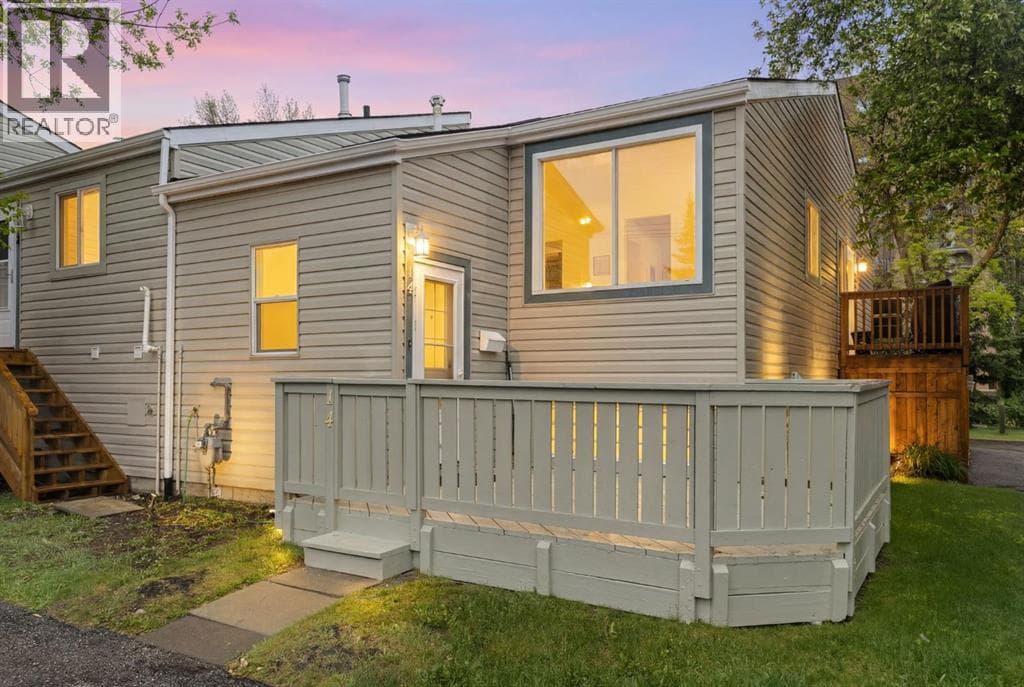
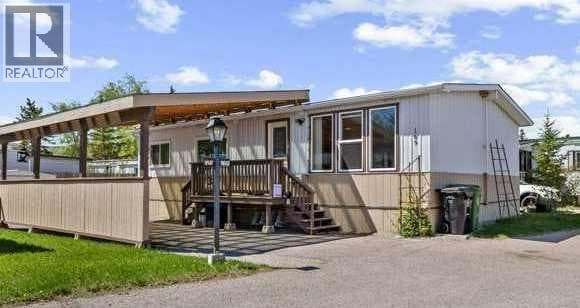
Older detached. The bulk of the existing stock. 1950s-1990s bungalows and two-storeys on 40-50 foot lots, single or double detached garages, mature yards. Condition varies widely — original-mechanical bungalows next to fully renovated character homes on the same block. Roughly $650K-$900K depending on lot size, condition, and how close you are to Bowness Park or the river.
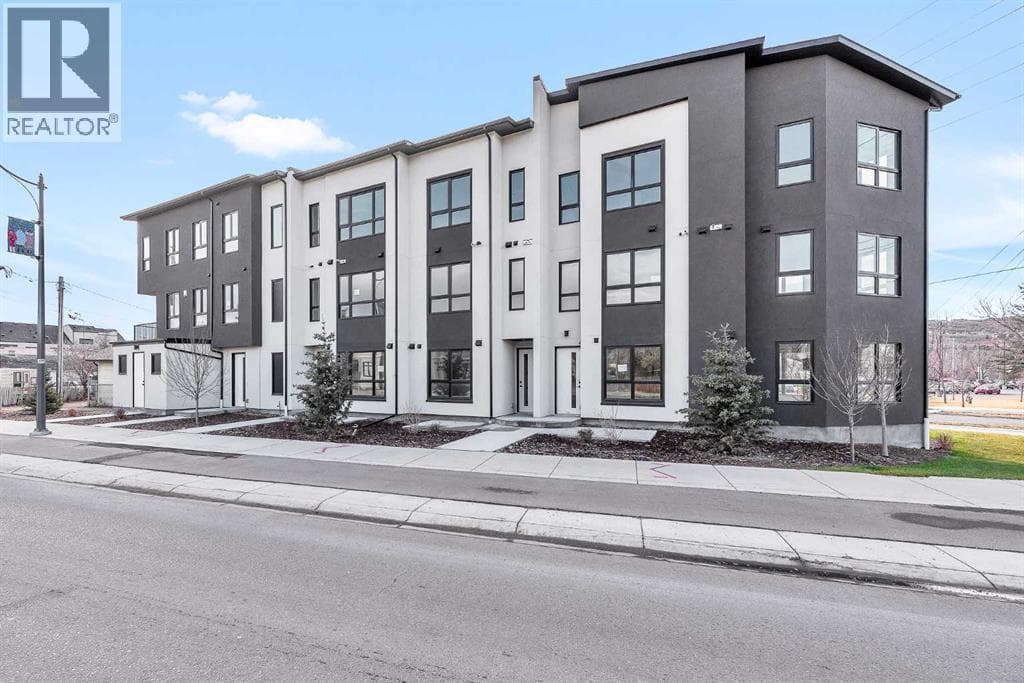
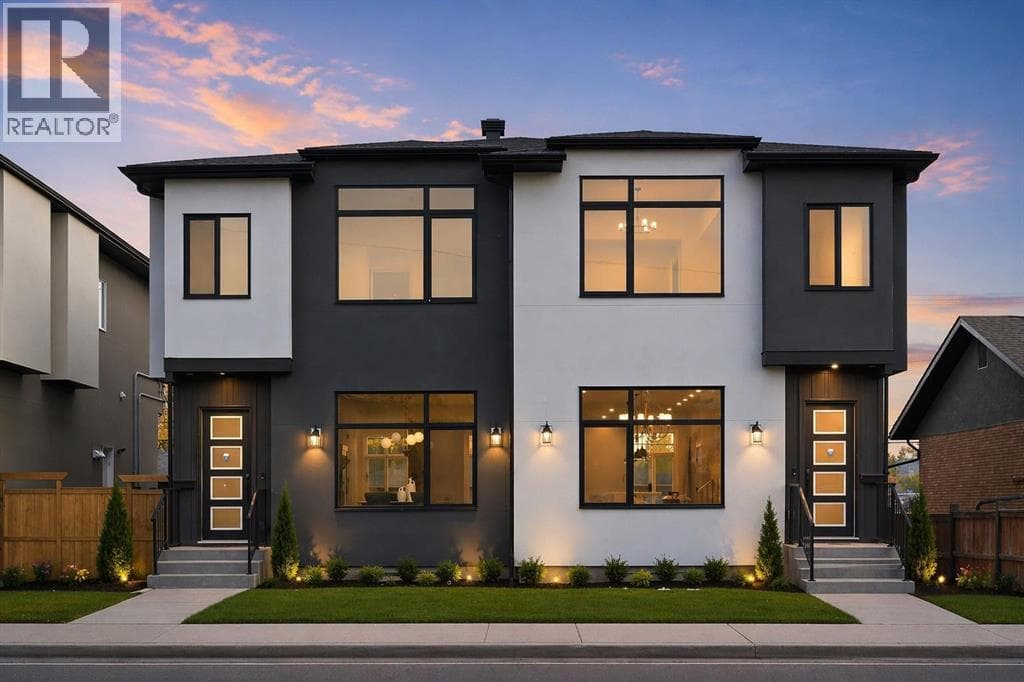
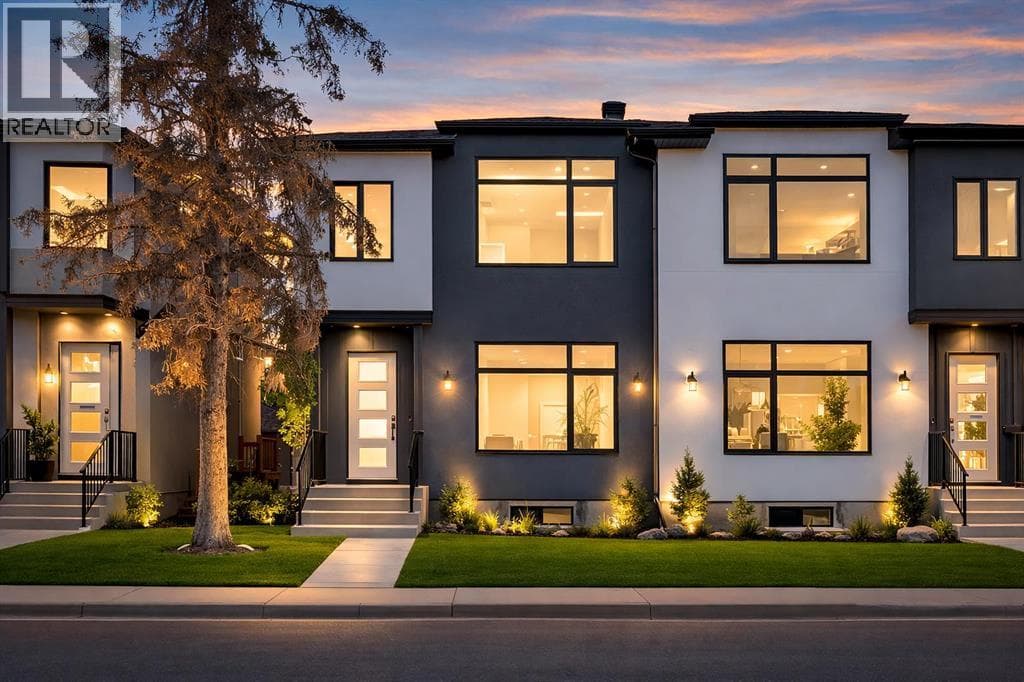
New infill (R-CG era). This is the segment driving most of the price growth. 50-foot lots being split or developed into 4-plex (two semi-detached, each with a legal suite) or 8-plex (4-up, 4-down) builds. New infills with finished basement suites are landing $900K-$1.4M+ depending on the build quality and how many doors the structure supports. Hasan's own Bowness project sits in this band — a 2025 build that runs as 4-up / 4-down with a mix of unit sizes.
Townhomes + condos. A smaller share. Newer townhome rows near Bowness Road and the Stoney Trail edge run $500K-$700K. Condo stock is genuinely limited — Bowness was built as a detached neighbourhood — but when units list they sit $300K-$450K, often older walk-ups.
| Type | 2026 typical | |---|---| | Older detached | $650K-$900K | | Renovated or new infill | $900K-$1.4M+ | | Townhomes | $500K-$700K | | Condos | $300K-$450K (limited supply) |
The 2026 zoning story (this is the big one)
Calgary's R-CG ("Residential — Contextual Grade-Oriented") district was the citywide blanket-rezoning move that turned a lot of inner and mid-ring lots into 4-unit-eligible parcels. R-CG was repealed on April 8, 2026 and goes off the books August 4, 2026. Anything that was already approved as R-CG, or that had a development permit submitted before April 8, is grandfathered forever — those lots keep the 4-unit, 11m height, 60% coverage envelope.
Post-August 4 the replacement district drops the per-lot ceiling from 4 units to 3, height from 11m to 10m, and coverage from 60% to 55%. A density change from 75 u/ha to 60 u/ha was still pending at the July 21 hearing as of this writing.
What that means for Bowness specifically: lots already through the R-CG approval window keep the bigger envelope and the development math that comes with it. Lots NOT yet through the process are now working under tighter rules. That asymmetry is creating real value differences inside the community block-by-block — and it's why we're watching grandfathered Bowness lots carefully for resale and pre-construction opportunities.
Multi-residential parking minimum stays at 0.625 stalls per unit — works out to roughly 5 stalls for an 8-plex, which is what tends to constrain dense infill before the height and coverage rules do.
Transit + the mountain factor
Bowness is not a walk-to-work neighbourhood. It's a drive-to-Banff neighbourhood.
Downtown. Around 20-25 minutes by car off-peak; longer in rush hour from Bowness Road into the core. The closest C-Train is Brentwood on the Red Line, a 5-7 minute drive, then ~20 minutes into downtown. Route 1 bus runs along Bowness Road as a daytime feeder. Most households here keep at least one car.
Mountains. The Trans-Canada Highway is 5 minutes away — the actual differentiator vs the rest of NW Calgary. Verified drive times off-peak: Canada Olympic Park ski hill 10-15 min, Kananaskis 50-70 min, Banff 1h15-1h45. If you ski, hike, paddle, or bike with any frequency, that 5-minute Hwy 1 access compounds into hundreds of hours over a few years of ownership.
Elevation. Bowness sits roughly 1,100-1,150m above sea level, vs ~1,050m for the SE/SW prairie areas of the city. NW terrain rises westward — observable in any drive up from the river. Slightly cooler summers, slightly more snow.
Who it fits / who it doesn't
Fits:
- Buyers who weekend in the mountains and want the 5-min Hwy 1 access compounded into every trip
- Investors looking at infill lots, especially anything with a grandfathered pre-April 8 R-CG approval still in play
- Owner-operators considering an MLI Select 4-plex or 8-plex build with the 5% down + premium-discount stack
- Households leaving Tuscany or Royal Oak for a more established feel with a real local cafe scene
- Buyers who value mature trees, character homes, and a community that already has its identity
Doesn't fit:
- Walk-to-work downtown buyers — Bowness is a car-first neighbourhood and a 20+ minute drive in
- Anyone who wants a master-planned modern suburb feel — Bowness streets curve, lots are irregular, the architecture is mixed
- Buyers shopping a brand-new condo without doing condo-supply homework first — Bowness condo stock is genuinely thin
How we think about Bowness right now
We spend a real amount of time in Bowness — our own NW base sits inside the community, so this isn't a community we read about on a Wikipedia page. That hands-on familiarity matters most on three calls: which infill lots actually pencil under the new replacement district, which older bungalows are renovation candidates vs tear-downs, and where the parking-minimum math breaks an aspirational 8-plex plan. If you're shopping Bowness — owner-occ or investor — get on the Calgary list and we'll text you the matches as they hit MLS, or browse current Calgary listings filtered to Bowness.
For the neighbouring NW lanes, Tuscany and Royal Oak are the master-planned siblings further west. For the inner-city downtown alternative, Beltline and Bridgeland are the trade-up for buyers who'd give up the mountain access in exchange for walkability.
FAQ
What is Bowness actually like as a community?
Mature NW Calgary neighbourhood in the Bow River valley — wide curving streets, mid-century to 1990s detached homes, mature trees, and a growing layer of new infill builds replacing the older 50-foot lots. Bowness Park anchors daily life and the Trans-Canada Highway is a 5-minute drive, which is the reason buyers who care about mountain access end up here.
How does the R-CG zoning change affect Bowness specifically?
Calgary's R-CG district was repealed April 8 2026 and goes off the books August 4. Post-August 4 the new replacement district drops the per-lot ceiling from 4 units to 3, height from 11m to 10m, and coverage from 60% to 55%. Existing R-CG approvals and any permit submitted before April 8 are grandfathered forever, so older lots already through the process keep their development envelope. Lots NOT yet through the process now have a tighter ceiling — this changes the infill math meaningfully.
What is the housing stock in Bowness?
Mostly detached 1950s-1990s on 40-50 foot lots, with a growing share of new infill 4-plex and 8-plex builds (some under MLI Select) and a smaller townhome and condo stock. Older detached runs roughly $650K-$900K depending on condition and lot size; renovated character homes and new infills sit $900K-$1.4M+; townhomes $500K-$700K; condos $300K-$450K when they appear (limited supply).
How easy is it to get downtown from Bowness?
Around 20-25 minutes by car off-peak, longer in rush hour. The closest LRT station is Brentwood on the Red Line, a 5-7 minute drive, then ~20 minutes into the core. Route 1 bus runs along Bowness Road. Most Bowness households keep at least one car — transit covers downtown but the geography (river valley, Hwy 1 ramps, COP) was built for driving.
Why are investors paying attention to Bowness in 2026?
Three reasons. One: 50-foot mature lots that pencil for infill — and the April-to-August R-CG window matters for which lots keep the larger envelope. Two: MLI Select is still active and supports 4-plex / 8-plex projects with down payments as low as 5%, premium discounts up to 30%, and amortizations up to 50 years on higher-pointed builds. Three: proximity to Hwy 1 and the river makes resale and rental velocity stronger than equivalent suburb-edge product. The community has structural tailwinds that newer NW edge communities do not.