So — Saddletowne on a weekday at 5:40pm. The train pulls into the station, the doors open, and a wave of people walks out and scatters — half toward the Genesis Centre, half toward the townhouse rows on the other side of the tracks, a few into the Co-op. Nobody's getting in a car. They're already home. That's the whole pitch for Saddletowne in one sentence: you live on top of the C-Train.
This isn't a big-yard, quiet-cul-de-sac community. It's a transit hub that grew houses around it. And for a specific kind of buyer — newcomer, first-timer, family that runs on the train — that's exactly the point.
Last updated:What It's Actually Like
The centre of gravity is the Genesis Centre, right beside the station. It's the building that does three jobs at once. The Saddletowne YMCA is in there — pool, training pool, climbing wall, running track, two indoor field houses, gym. The Saddletowne branch of the Calgary Public Library is in there too — programs, computers, a quiet place for kids to do homework. And the field houses double as the room where the community hall events happen.
For a family on a budget, that one building replaces a $200/month gym membership, a paid kids' swim program, and a babysitter-for-an-afternoon problem. You walk over. That's the value most price tables miss.
Across from the station is the retail. The Co-op anchors it — and the Taradale Co-op specifically runs a certified halal meat counter, which matters a lot to who lives here. Around it: the usual mix of takeout, a couple of South-Asian restaurants, a pharmacy, a clinic. It's not a date-night strip. It's a get-the-week-done strip, and it works.
Walk past the retail and you're into the housing. Townhouse rows close to the station, then detached streets fanning out into the rest of Saddle Ridge. The streets are full of kids on bikes after school and grandparents on evening walks. It feels lived-in, busy, multigenerational — the opposite of a sterile new suburb.
By 9pm it's quiet on the residential streets. The trains keep running, the Genesis Centre lights stay on for evening programs, and then it settles. The trade is real: you get density and transit, you give up the big-lot hush. Nobody's pretending Saddletowne is the country.
Housing Stock
Three flavours, layered by how close you are to the station.
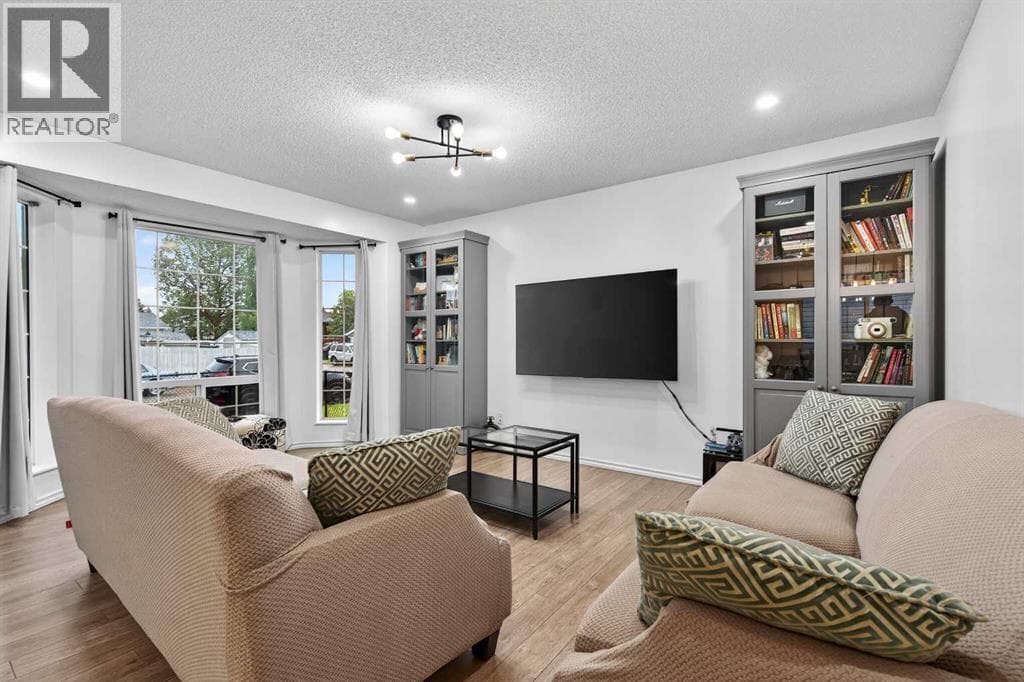
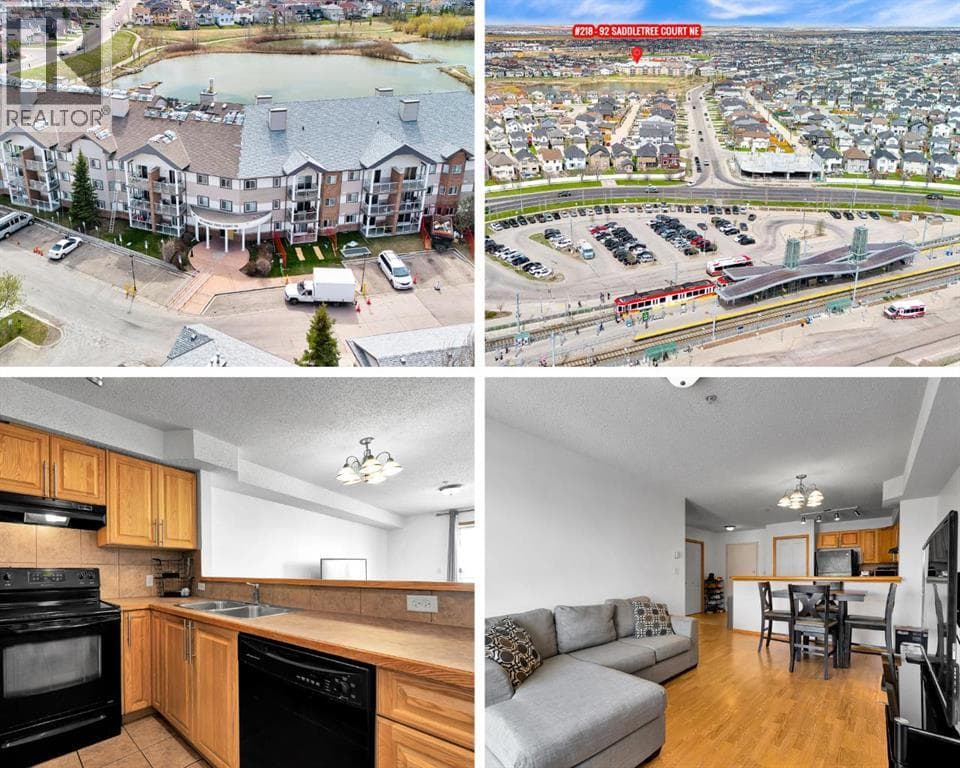
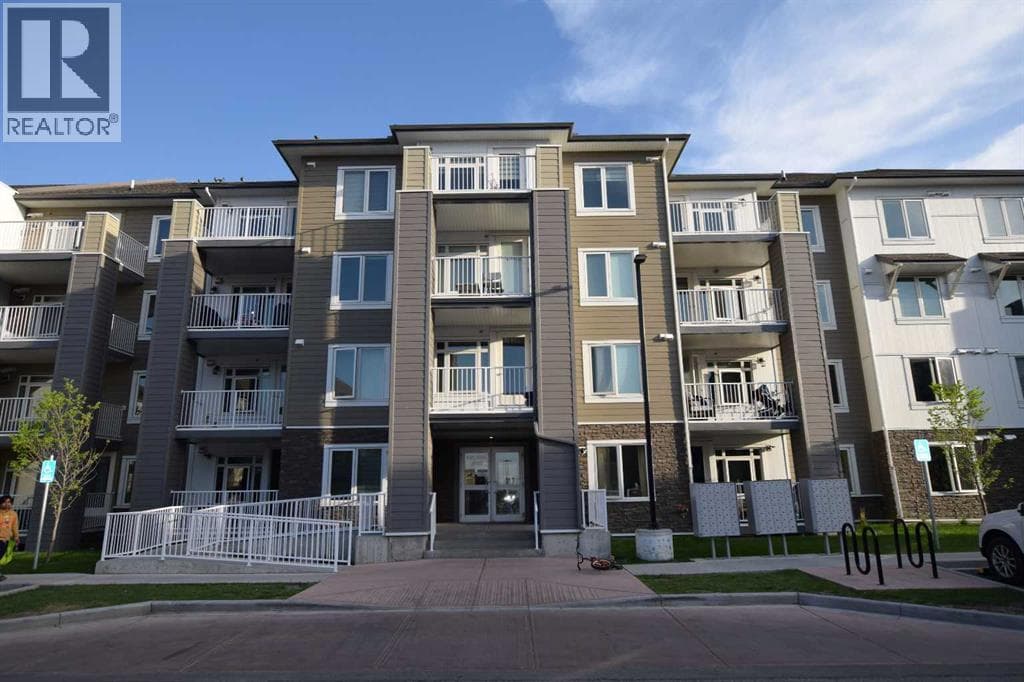
Condos. The newest part of the stock — multi-family buildings that went up as the station drew density. Mostly 2010s-era low- and mid-rise, 1- and 2-bed units, surface or underground parking, condo fees that sit lower than inner-city equivalents. This is the cheapest way into the community and the most common first purchase for a newcomer or a single buyer.
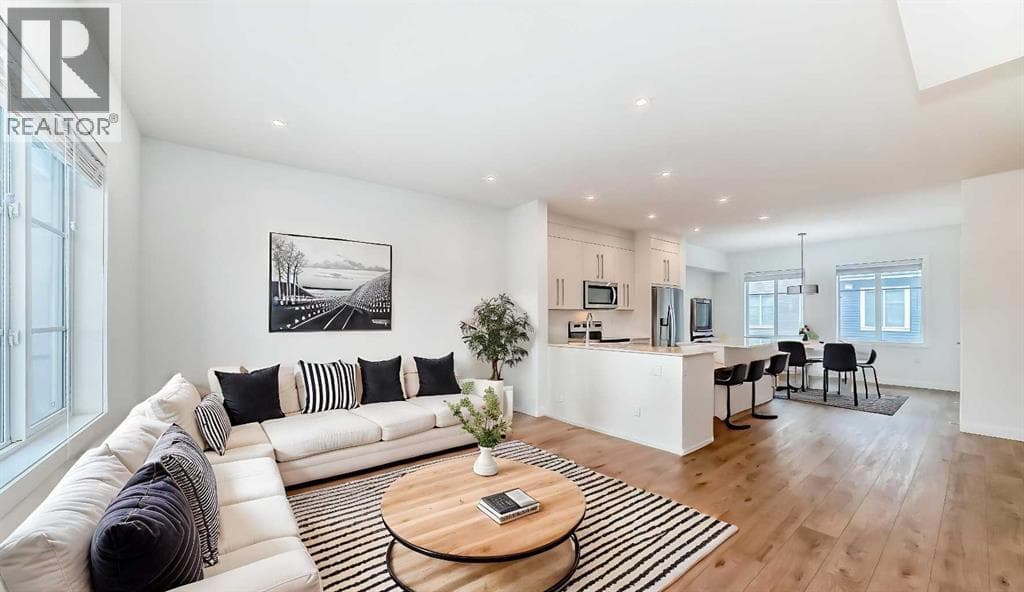
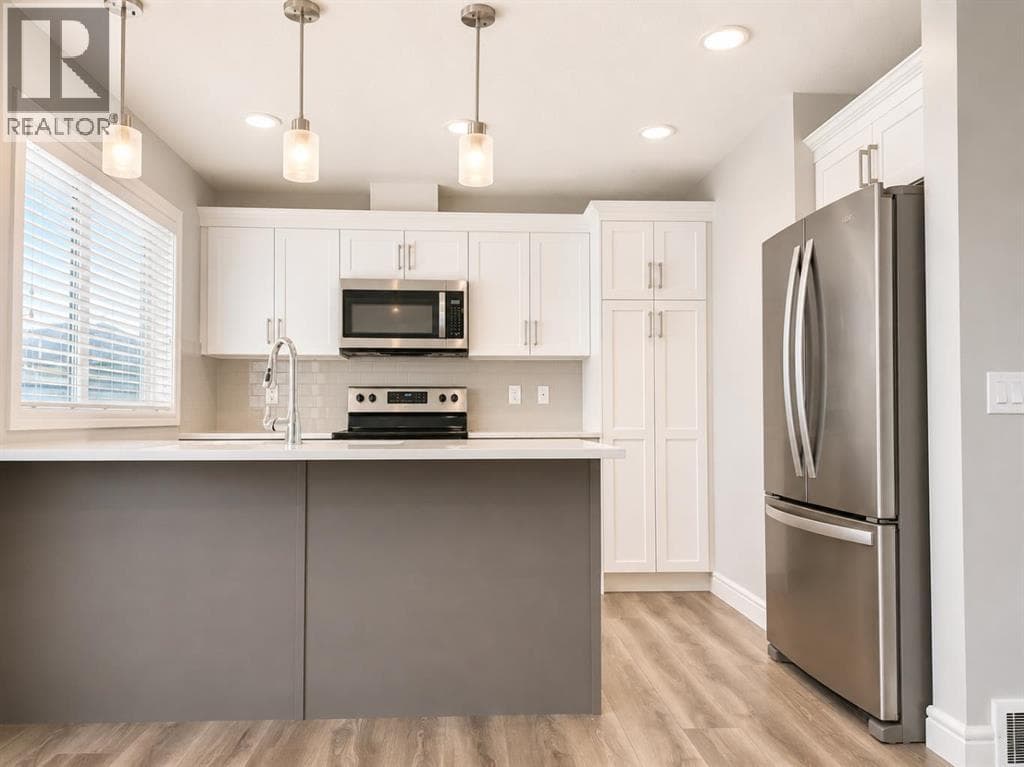
Townhouses. The volume play near the station. Two- and three-storey rows, attached garage or assigned parking, often 3-bed layouts built for families who want a yard-ish patio without detached-home pricing. A lot of multigenerational families land here first.
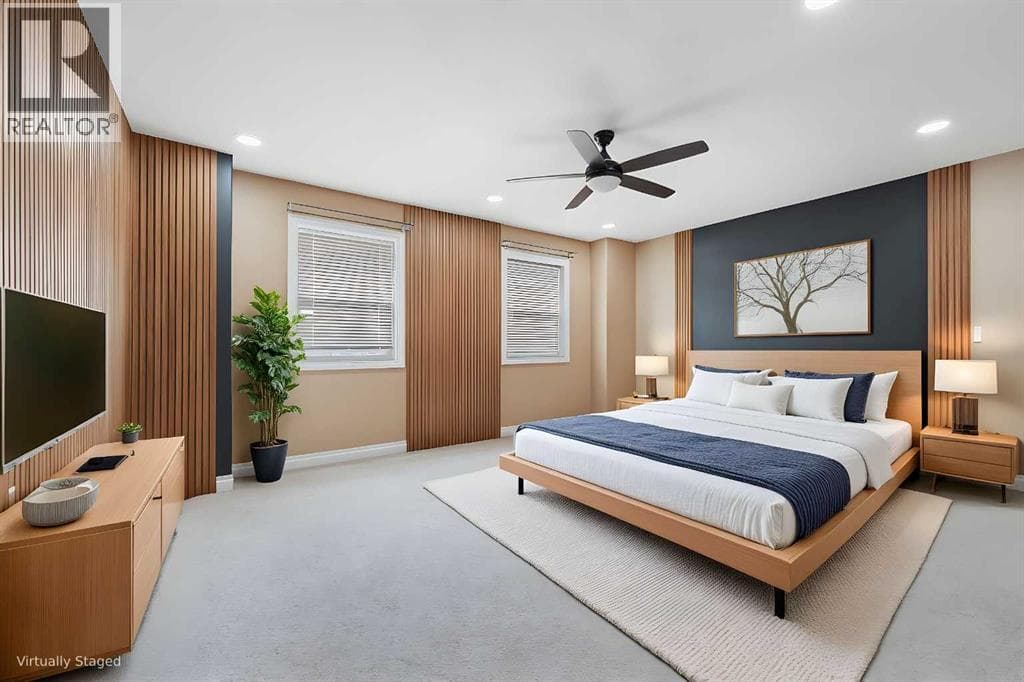
Detached. Mostly 2000s-2010s Saddle Ridge stock around the station core — two storey, attached double garage, full basements (many finished or with a basement suite, legal or not). These are family homes, not infills. The premium ones have a legal basement suite, which is how a lot of NE families carry the mortgage.
What's moving in 2026: townhomes and detached homes with a basement suite, anything that lets a family put a relative or a tenant downstairs. What sits longer: the higher-end detached over $650K, which competes with newer stock further out in Cornerstone and Redstone where the house is bigger for the money.
The Numbers
| Type | 2026 typical | Notes | |---|---|---| | 1 bed condo | $200K–$280K | newer multi-family near the station | | 2 bed condo / townhouse | $300K–$450K | 3-bed townhomes top of this range | | Detached (no suite) | $500K–$600K | 2000s–2010s Saddle Ridge stock | | Detached w/ legal suite | $600K–$700K | the family + rental-income play |
CREB's March 2026 benchmarks are $741,300 for detached and $301,200 for a condo citywide. Saddletowne sits below both — which is the entire reason it works as a first-buyer and newcomer community. Plain English: a Saddletowne condo near the train is one of the cheapest ways to own anything in Calgary that comes with a one-seat ride downtown.
For context, the citywide April 2026 average detached price ran in the low $830Ks and townhomes around $461K. NE Calgary, Saddletowne included, pulls those averages down, not up — this is the affordable end of the city, not the expensive end. The April 2026 Calgary market report has the full benchmark table.
Who It Fits / Who It Doesn't
Fits:
- Newcomers who don't have a car yet (or want to stay a one-car household) — the train and the bus terminal do the heavy lifting
- Young South-Asian and Muslim families who want to be inside the NE community, near halal groceries and a mosque-dense part of the city
- First-time buyers stretching an FHSA + down payment into actual ownership instead of renting
- Transit commuters who work downtown or along the Blue Line and refuse to sit in Deerfoot traffic
- Multigenerational households that need a basement suite for a parent or rental income
Doesn't fit:
- Buyers who want a big lot, mature trees, and a quiet cul-de-sac feel — that's not what station-area density is
- Anyone whose lifestyle is a walk-to-restaurants-and-bars evening — Saddletowne is errands and family, not nightlife
- Buyers chasing the biggest possible house for the money — newer communities further out give you more square footage per dollar
Transit + Walkability Reality
This is the category Saddletowne actually wins.
LRT. Saddletowne station is the northern terminus of the Blue Line (Route 202), opened in 2012. It's a one-seat ride downtown — no transfer. The trip to the core is real C-Train time (budget the better part of 40 minutes from the far end of the line), but you board at the start of the line, so you usually get a seat. From most of the residential core, the station is a 5–15 minute walk.
Bus. The Saddletowne terminal next to the station is a genuine hub — multiple routes feed into it (the 23, 100, 71, 80 and 68 among them), wiring the surrounding NE communities to the train. If you don't drive, this is the connection point that makes a car optional.
Driving. Métis Trail and Country Hills Boulevard get you to Deerfoot and Stoney Trail quickly. The airport is close — 10–15 minutes — which matters for the many families here with relatives flying in and out.
Schools. Saddle Ridge School (CBE) serves the area, with Taradale School nearby; the Calgary Catholic district (CCSD) has designated schools for the catchment too. Confirm your exact address against the CBE school finder and the CCSD school list — designations shift block to block in the NE.
Saddletowne for Newcomers + Muslim/South-Asian Families
This is the core of why people choose Saddletowne, so we'll be specific.
The NE quadrant around Saddletowne is one of the most South-Asian- and Muslim-dense parts of Calgary. That's not a marketing line — it shows up in the grocery stores, the restaurants, the school playgrounds, the languages you hear at the station. For a family arriving from Pakistan, India, or Bangladesh, the network is already here. That network is the amenity.
Mosque. The Akram Jomaa Islamic Centre — one of northeast Calgary's largest and most established Islamic centres, serving thousands of NE Muslims — is a short drive from Saddletowne (it sits closer to 39 Ave NE, not inside the community itself). Plan a few minutes by car for Friday prayers and Eid. Smaller prayer spaces dot the NE, and the broader NE is genuinely the mosque-dense part of Calgary. If proximity to a masjid is your top filter, read living near a mosque in Calgary before you pick a street.
Halal groceries. The Co-op at Taradale runs a certified halal meat counter, and the NE is full of independent halal butchers and South-Asian grocers within a short drive. You are not making a special trip across the city for halal here — it's the default.
Community life. The Genesis Centre and the Saddletowne Library run programs that newcomer families lean on hard — swim lessons, kids' programs, ESL-adjacent supports, a warm place to be in January. For what's happening locally, the Saddle Ridge events page tracks community gatherings and seasonal programming nearby.
For the full breakdown of which NE communities fit South-Asian families and why, the South-Asian families Calgary neighbourhoods guide compares Saddletowne against Taradale, Martindale and Skyview. And if you're a first-time buyer, the Calgary first-time buyer programs guide walks the FHSA + HBP stack that gets you into a Saddletowne condo.
FAQ
How much does a home in Saddletowne cost in 2026?
Condos start in the low $200s and run to about $340K. Townhomes sit $320K–$450K, with 3-bed family units at the top. Detached homes run $500K–$650K, and detached with a legal basement suite pushes toward $700K. That's well below Calgary's citywide benchmarks — the March 2026 detached benchmark was $741,300 and the condo benchmark $301,200 — which is exactly why Saddletowne works as a first-buyer community.
Can I live in Saddletowne without a car?
Yes, more realistically than almost anywhere else in suburban Calgary. You're walking distance to the Saddletowne LRT station (one-seat ride downtown, no transfer) and the bus terminal that feeds the whole NE. The Co-op, the YMCA, the library and a clinic are all close. A lot of one-car and no-car households live here on purpose. The honest caveat: winter walking to the station in January is real, and a car still helps for big grocery runs and getting to the mosque.
Is Saddletowne good for newcomer and Muslim families?
It's one of the strongest fits in the city. The NE around Saddletowne is heavily South-Asian and Muslim, halal groceries are the default (the Taradale Co-op has a certified halal meat counter), and the Akram Jomaa Islamic Centre — one of NE Calgary's largest — is a short drive away. The existing community network is the real draw: for many arriving families, people they already know live within a few blocks.
How long is the C-Train commute downtown from Saddletowne?
Saddletowne is the northern end of the Blue Line, so you board at the start and usually get a seat. Budget close to 40 minutes to the downtown core — it's a real ride, but it's a one-seat ride with no transfer, and you skip Deerfoot traffic entirely. For commuters who value a predictable, sit-down trip over raw speed, that's the win.
What's the rental market like in Saddletowne?
Steady, because the affordability and transit pull renters and the basement-suite supply is large. 2-bed condos and townhomes rent in a workforce range, and detached homes with a legal lower suite let owners offset the mortgage — which is how a lot of NE families carry the purchase. Verify any basement suite's legal status before you underwrite the rent; the City of Calgary suite registry is the source of truth, and a legal suite affects financing, insurance and resale.
Is Saddletowne the same as Saddle Ridge?
Close, but not identical. Saddletowne is the station-area heart — the LRT, the Genesis Centre, the retail, the densest housing — inside the larger Saddle Ridge community. When people say "I bought in Saddletowne," they usually mean the transit-hub pocket. If you want a bit more space and a little less density, look at the wider Saddle Ridge streets, or the neighbouring communities of Taradale and Martindale.
Bottom line: Saddletowne is the Calgary community for buyers who want to live on top of the C-Train, inside the NE's Muslim and South-Asian network, on a first-buyer budget. The Genesis Centre does the work of three amenities. Condos near the train are some of the cheapest ownership in the city. The trade is density over space — and for the right buyer, that's not a downside.
Want Saddletowne and Saddle Ridge listings the day they hit the MLS? Get on the Calgary list and we'll send NE stock that fits your budget. Or browse current Saddletowne listings and text us the three you want to see — we'll get an agent on it and walk the station, the Co-op and a couple of suite-ready streets with you.